January 28, 2026
The new year of 2026 started with a mixed bag of weather in our area covering just about all sorts imaginable. There’s been some very cold nights with hard frosts, a couple of named storms with strong winds, some heavy rain with or without wind, a few grey dreary spells with poor light and thankfully a few bright sunny days.
However, we run to an agreed calendar and as much as possible try to adapt our outings to the weather. For our first outing was planned as a not too far from home trip when we could pull out at lunchtime if we were too cold or wet but the weather gods smiled on us in giving us a day that steadily got better. In fact, by lunchtime members were loosening their multi-layer clothing and there was even time for basking in the sun on the bench at one of the shelters!
This was all in contrast to ten days previously when the site was partly inaccessible due to flooding so although the flood water had subsided the ground was still wet and generally slippery and in some places around gates deep mud was the order of the day.
I was pleasantly surprised on arrival to find that ten of us had decided that we could cope with whatever the conditions turned out to be.


I’m usually cautious about saying what birds we might find as experience has shown they don’t always show themselves when expected but fortunately this is balanced by unexpected appearances. Reports in local media and from colleagues were that some interesting and unusual ducks had been visiting. Three in particular were from a family known as sawbills, a type of diving duck that we only see in St Ives in mid-winter.
The first was a Red Breasted Merganser which had been at Fen Drayton for several weeks and had become a celebrity as it’s a duck that is normally seen at sea and very rarely inland.
Another rare winter visitor and again a diving duck was the Smew. The drake is pure white and a very elegant fellow. These are seen at Fen Drayton but not every winter. They also have a soft spot for the lakes behind the re-cycling plant in Meadow Lane St Ives. The third star bird was a Goosander which could be described as an inland and coastal version of the Merganser.
So, we were prepared to spot any of these but to cut a long story short if they were there they didn’t co-operate. It’s amazing how birds can hide in the undergrowth or in the case of ducks disappear into the reeds and tree roots around the edges of lakes and ponds.
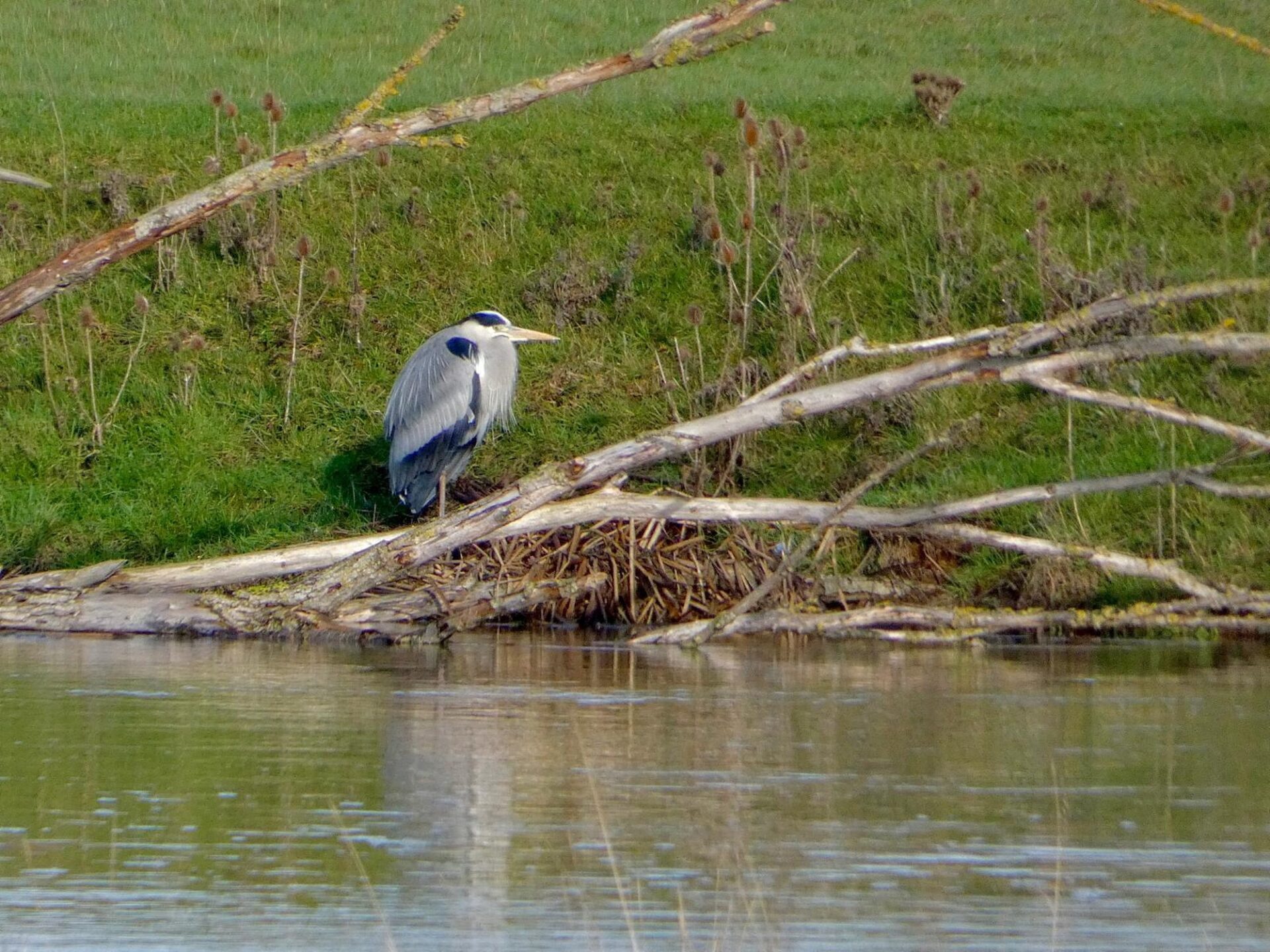
However, we pressed on and at our first stop at Far Fen we found good numbers of Mute Swans, Greylag Geese, Gadwall, Pochard, Golden Eye, Mallard, Tufties, Moorhen, Coot, Wigeon and Great Crested Grebe.
While walking between lakes we saw Fieldfare and Redwing, while Song Trush could be heard. Passerines in the hedges included Blue, Great and Long-tailed Tits, and a small flock of Linnet were noted. The regular culprits such as Cormorants and Corvids were also present and a Kestrel was spotted at the back of Swavesey Lake. Fen Drayton is a good spot for Marsh Harriers and Bittern but we were unlucky with them on this trip.
Ferry Lagoon, the biggest of the Fen Drayton lakes, held lots more Wigeon which could be heard whistling. There were also a few Pintail, one of the most elegant winter ducks and several more Golden Eye.
By this time the sun had come out and we sat at the viewing screen basking in the unseasonal warmth.
A very successful walk, plenty of birds and good company.
We’ll have to wait for another day for Merganser, Goosander and Smew!
Let’s hope the weather is as kind for our February Trip.
Kestrel Redwing Grey Heron