Date: 26/05/2024
Seven members of BG2 met at Fowlmere on a warm sunny morning in stark contrast to some of our earlier trips this year when the weather was less kind. We were joined for this trip by new member Karen who was seeing what we get up to on our field trips.
In fact, it was Karen who spotted the first significant bird of the day, which was flying very high in the clear blue sky. Some of us struggled to see it as it was only visible when the sun lit it from particular angles. We agreed it was not a Red Kite and its behaviour was not like a Sparrowhawk or a Common Buzzard. However, it had a distinct white band around its middle suggesting it was a female Hen Harrier, or Ringtail as they are often called.

After that splendid start, we entered the reserve along the boardwalk through the shrub and light tree cover and on into the reedbeds. Chiffchaff were calling and as we approached the first hide a Greenfinch was heard and a Song Thrush was perched nearby singing in full view. The view from the hide was overgrown so that little could be seen and regrettably the carefully positioned Kingfisher perch stick was not occupied. A juvenile Moorhen was poking around at the water’s edge but little else was showing.

As we moved on along the path, we heard and occasionally saw Blue Tits, Great Tits and Long Tailed Tits. A possible Tree Creeper sighting remained unconfirmed as the trees at this point were heavily cloaked in ivy making any small bird hard to spot.
The main hide is elevated in the middle of the reedbed and commands a view over open water. There were plenty of good-sized dragonflies but here my knowledge of species runs dry. We were hoping they would attract Hobbies but most of the raptors seemed to be busy at high altitude. Maybe they knew something we didn’t about where the food was.

Although it’s true that Hobbies like to feed on dragonflies and are very agile fliers being able to shoot up, down and sideways to catch their prey which are also nifty movers, we didn’t actually get to see any action over the reed bed.

Hobbies are often compared to large hirundines in appearance and are one of the very few raptors that can catch swifts in flight, especially young ones.
On the water we saw Coot with young families, a few Mallard and a solitary Little Egret. In the reeds, Reed Warbler were singing and flitting about as was a Common Whitethroat.

Moving on towards the spring pool, we checked out the owl box but there was nobody home apart from a couple of Wood Pigeons.
We followed the path alongside the freshwater stream where the odd Brown Trout was lazing away the day. Passing the field gate by the hay meadow, we heard a Yellow-hammer calling it’s ‘little bit of bread and no cheese’ refrain.
The final hide is a small wooden shed on the edge of the reedbed from which warblers and occasionally Water-rail can be seen at close quarters. Today however, the midday heat was intense and the reed growth was luxuriant so we didn’t stay long.
All in all a good trip but with the temperature rising we were all glad that this was a half-day trip and we could retreat to the coolness of our homes for the afternoon.
Words by John
Pictures by Melvyn
Chiffchaff 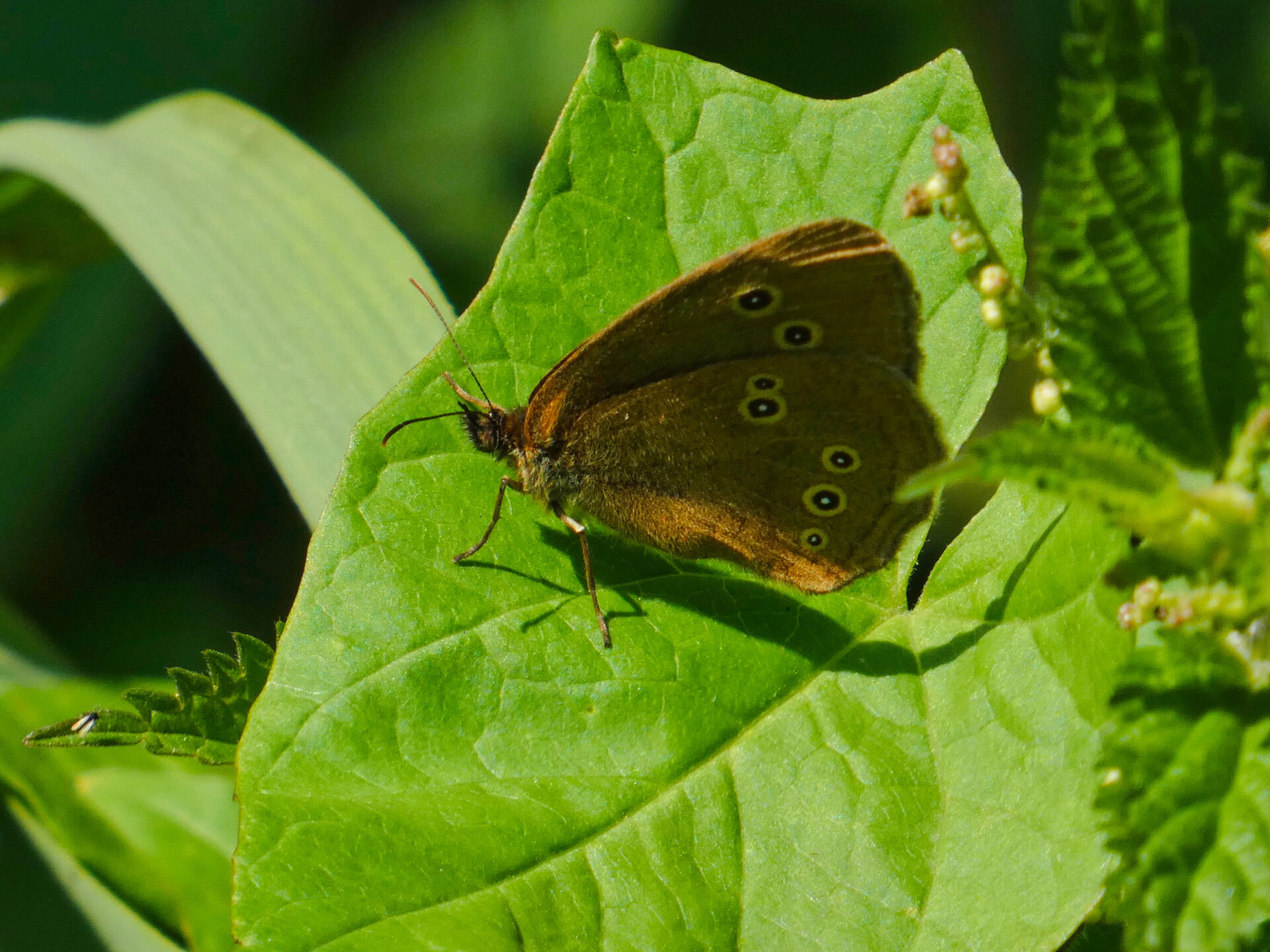
Ringlet butterfly Song thrush 
Song thrush 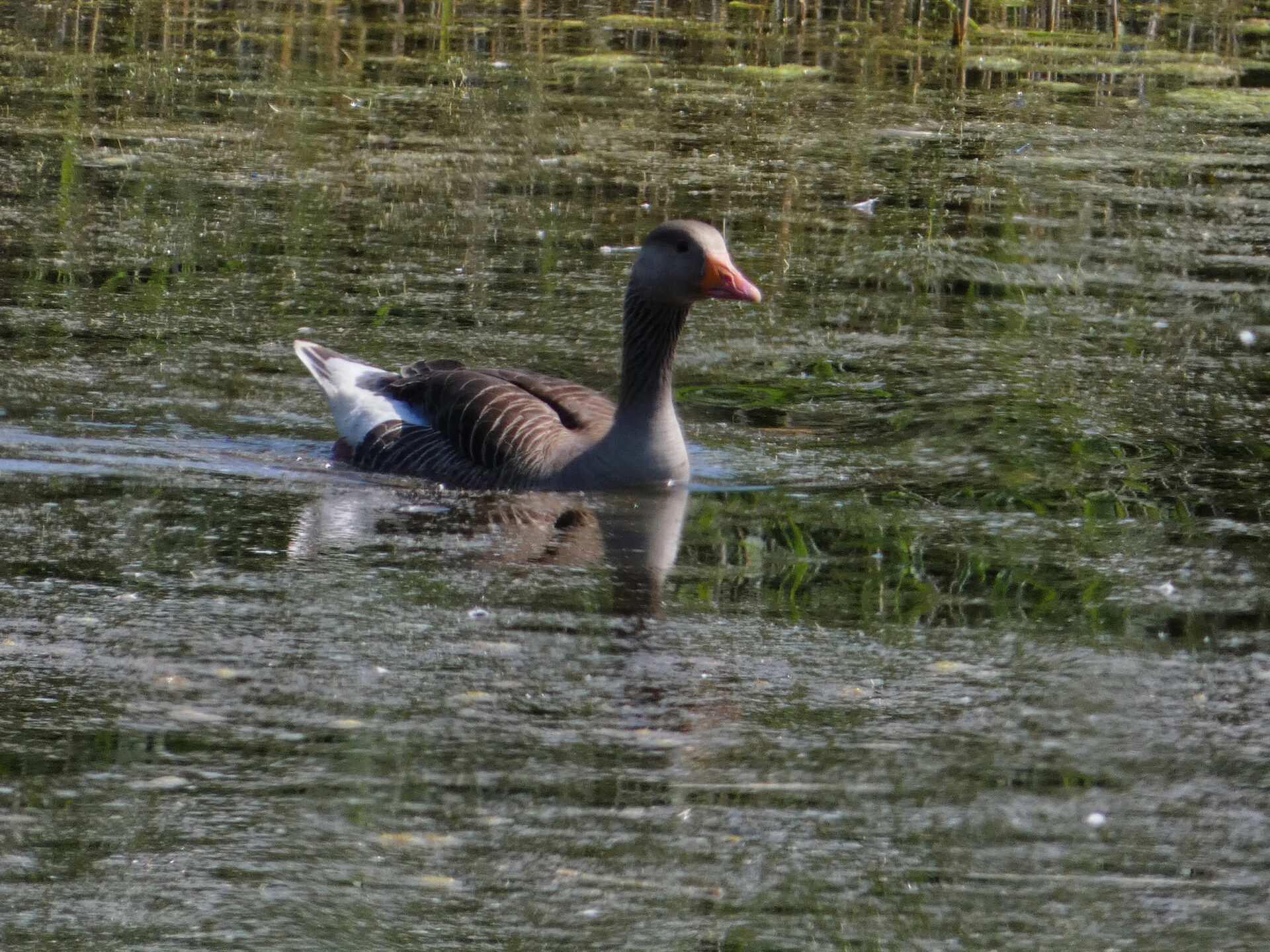
Greylag goose Reed Warbler 
Reed Warbler Mallard Damselfly 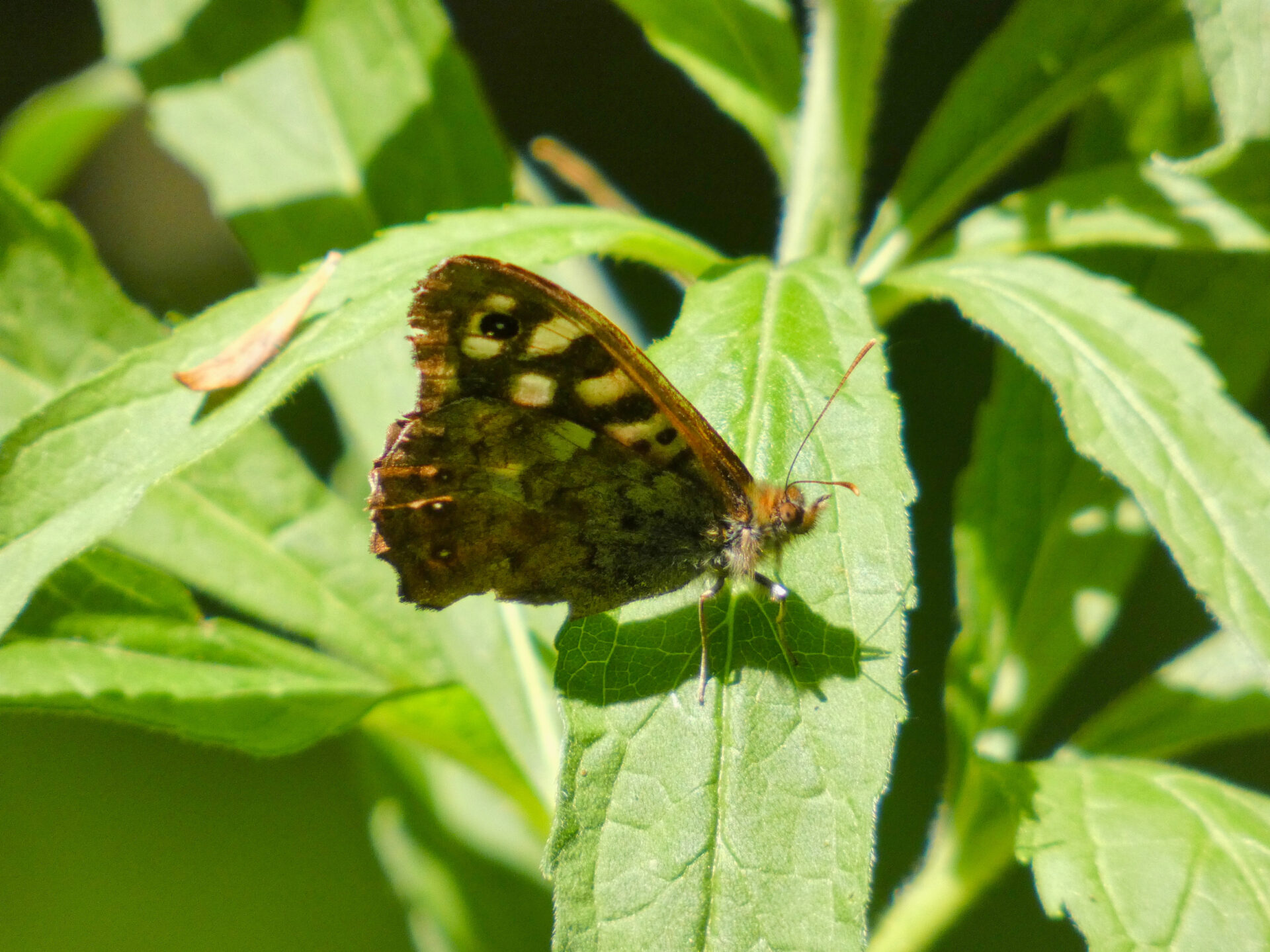
Speckled Wood butterfly