July 24, 2024
Nine members of BG2 and one partner met at Titchwell on a warm and dry sunny morning with hardly any wind. Perfect conditions for birdwatching in reedbeds where the movement of the reeds draws attention to a possible bird or animal presence.
I had visited the reserve three weeks earlier and been delighted to find a pair of Spotted Flycatchers nesting in the thicket alongside the path from the car park to the visitor centre. Unfortunately for us, the chicks had fledged a couple of days before our trip but three more Flycatchers is still something to celebrate. We spent a while watching to see if the young family were still nearby. They probably were, and Merlin picked up their presence, but despite our ten sets of eyes we didn’t find them. Flycatchers are rather attractive little birds that are now described as scarce summer visitors. They arrive from Scandinavia in May and depart in September to Africa. Traditionally, they bred in well-established gardens but like so many small birds are in decline for reasons that are not fully understood. I remember watching them in the garden of Sculthorpe Mill while I downed a pint of Adnams in the sunshine and a pair of Mute Swans passed through with eight cygnets moving along the river Wensum. A perfect English summer afternoon!
The other Flycatcher that is fairly common in the UK is the Pied variety. These are rare in East Anglia, preferring the damp oak woodlands of Wales, the west country and the north west. Many birds that migrate do so to find favourable sites in which to breed before moving on to places that have warmer winters. Flycatchers breed in the middle of their migratory journey. This just goes to demonstrate that different species have different strategies. It’s definitely not a case of one size fits all in the bird world!
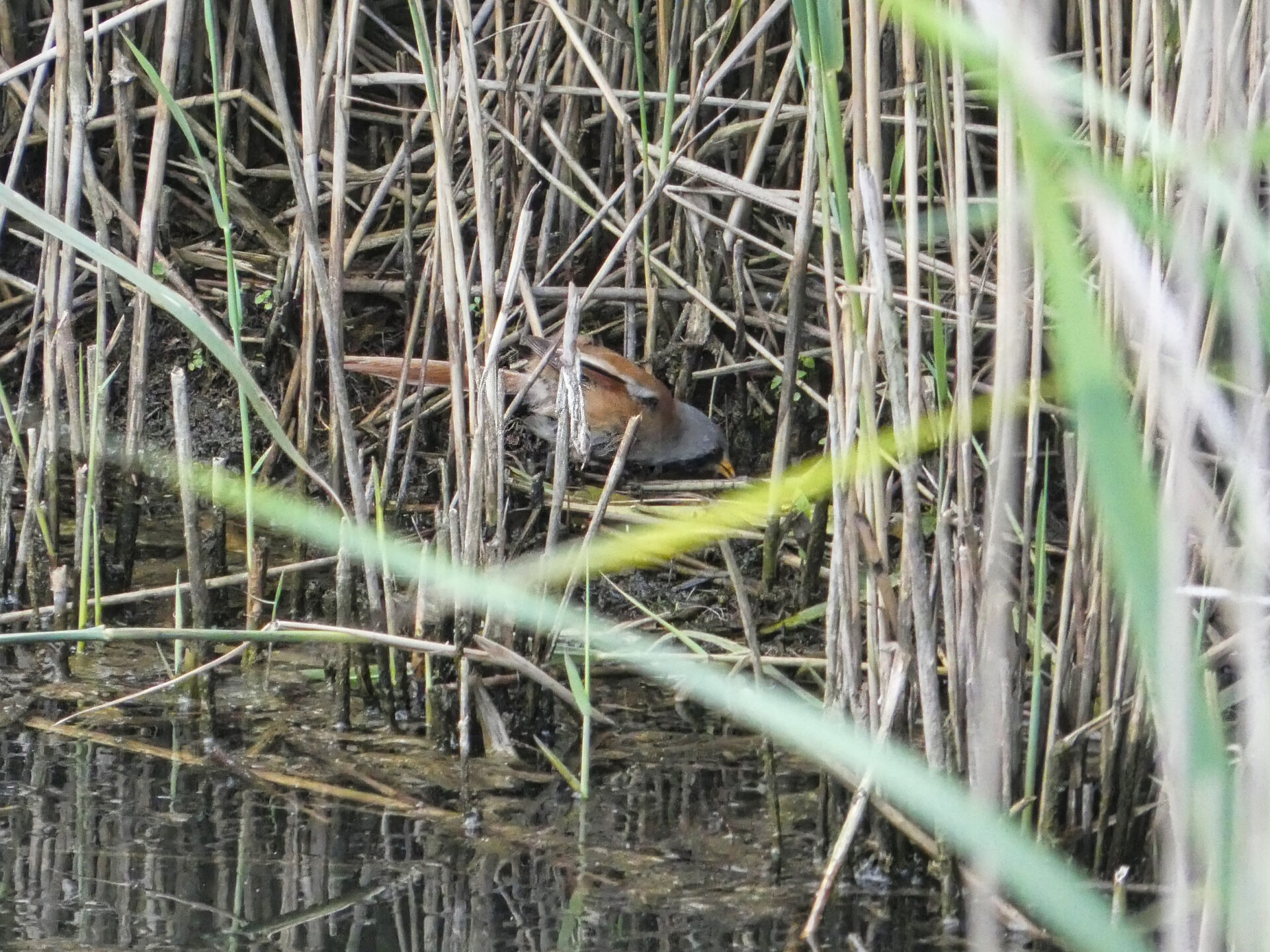
Moving onto the reserve and taking the beach path alongside the reedbeds we were pleased to find an adult male Bearded Tit, or more correctly Bearded Reedling as genetically they are not tits at all. We had my partner Anne to thank for spotting it at the base of the reeds. Anne is not a member of the group as she says she is not a bird watcher, but she does have a knack of spotting interesting birds while not bird watching!
At this time of year, Bearded Tits are often seen in family groups and they can be delightful as they cling to reeds well above water level and sway to an fro. Their call is usually described as ‘pinging’ in the guide books but personally I’ve never noticed that.

Arriving at the first hide, we had splendid views of Avocets, Common Terns, Black-headed Gulls many with juveniles demanding attention. Further into the middle of the freshwater lagoon there were 6 Spoonbills and a large flock of Black-tailed Godwits. Lapwing and many of the commoner dabbling ducks, Little Grebe, Coot and Moorhen were present.
Marsh Harriers were active on the fresh marsh and from time to time flew over, keeping the starlings and water fowl on their toes. (probably not the right metaphor).
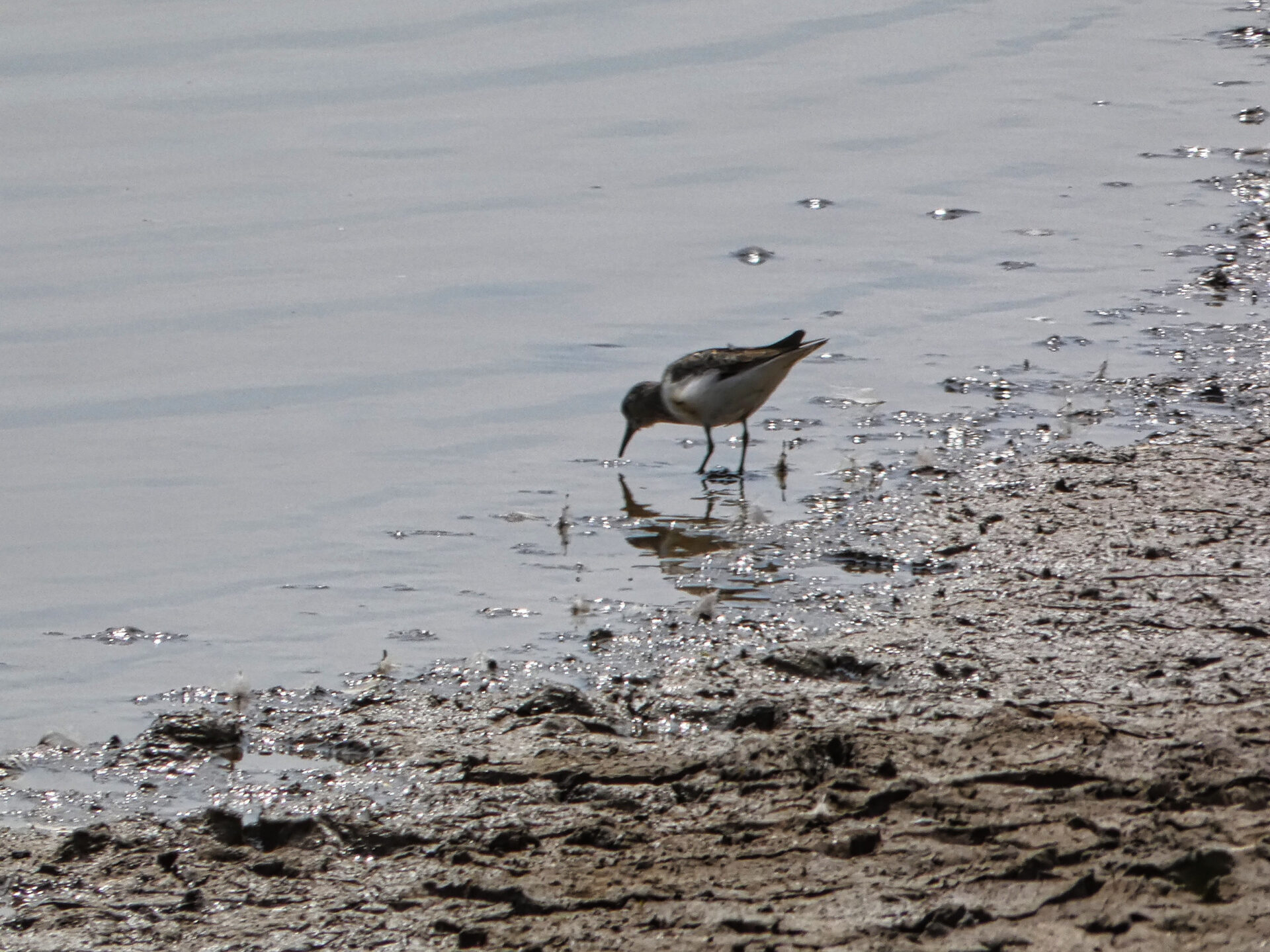
At the Parrinder Hide, the main attraction was a tiny wader busy at the water’s edge right in front of us. It was a Temminck’s Stint, the rarer cousin of the Little Stint. It is difficult to realise how small these birds are although usually they are in amongst Dunlin flocks where the size difference is clear. Stints look quite similar to Dunlin and when viewed singly at a distance it is difficult to be sure which species you are looking at. However, the Temminck’s Stint was living up to the guide book description which says juveniles creep secretively along freshwater margins often singly. The yellowish legs were less convincing but we were looking into the sun and shadows can be confusing. Anyway, it was a handsome little bird with very clean white underparts and a slightly down-curved black beak.
The guidebook says they are rare migrants with only 100 – 150 recorded each year on migration from the Middle East to Scandinavia typically between May and August. By contrast, Little Stint, typically 750 per year, are usually seen between July and October when they migrate from the Arctic to Africa. Stints are familiarly known as ‘peeps’.

Other waders and gulls were present on the fresh lagoon but stubbornly stayed out of range of our view.
Moving on towards the sea, we found Curlew, Oystercatchers, Dunlin, Turnstones and of course larger gulls. On the fresh marsh Swallows were swooping, a Meadow Pipit and a possible Corn Bunting were seen. Little egret and Curlew were also spotted.
The beach itself was quiet at midday with the tide on its way out. Lunch called and the food was back at the car park.

During lunch we were accompanied by a blackbird and afterwards we were treated to views of a Chiffchaff with two chicks in the bushes next to the visitor centre. They may well have been a second brood.
We walked through the scrubby tree belt on the path to the Tank Road and Patsey’s Pool where we found Gadwall, Pochard, Mallard, Little Egret, Little Grebe, Coot, Moorhen and Greylag Geese. There have recently been Red-crested Pochard on this pool but they were not showing during our visit.

A female Marsh Harrier swooped over but decided against tackling any of the water fowl and returned to the marsh looking for frogs or worms.
Altogether we had a successful day with Bearded Tit, Spoonbill and of course the Temminck’s Stint proving to be the pick of the pack.
Words by John
Picture by Melvyn
Bearded Tit Avocet Black-tailed Godwit Temmincks stint Chiff-chaff chicks Marsh Harrier