Date: 27/03/24
Lackford Lakes run by the Suffolk Wildlife Trust offers a great range of birds and even better has a very nice visitor centre with easy parking, snacks and toilets. Not surprisingly it has been a favourite over the years and although familiar to most of our members usually turns up something special. Last year we went a little later in the season and were treated to nightingales singing on the drive before we had even reached the car park. This time we had chiffchaffs galore and blackcaps were singing at several locations.

The lakes held a variety of ducks including good numbers of Shelduck with their bright red bills. Goldeneye and some of the Teal and Wigeon had gone back north to their breeding grounds. Male Pochard had arrived to grab the best territories while the females will be arriving in the next few weeks from their wintering grounds in Spain.
Waders were represented by Redshank, Lapwing and Snipe with Greylag, Canada and Egyptian geese.

Raptors were also present with Marsh Harrier swooping over the water while Red Kites circled above and a Buzzard soared high over. In fact Buzzards are now so common that they are posing problems for other species such as Barn Owls, which they predate. Another success story is the Little Egret, which are now believed to outnumber Grey Heron.

Moving on down to Ash Carr, we found Nuthatch and Coal Tit posing on the photographers fallen tree trunk and nearby we found a Tree Creeper. That’s a bird where it helps to be in a group and have lots of pairs of eyes to spot them. They just seem to appear from nowhere as they quietly get on with their feeding routine of climbing tree trunks looking for insects.

We paused opposite the Kingfisher nest bank and after a while we were rewarded by a flash of blue as our target flew in typically fast and in a straight line just above water level. Later we had a second flight but on this occasion no perching so we had to be content with our few seconds of this beautiful bird.
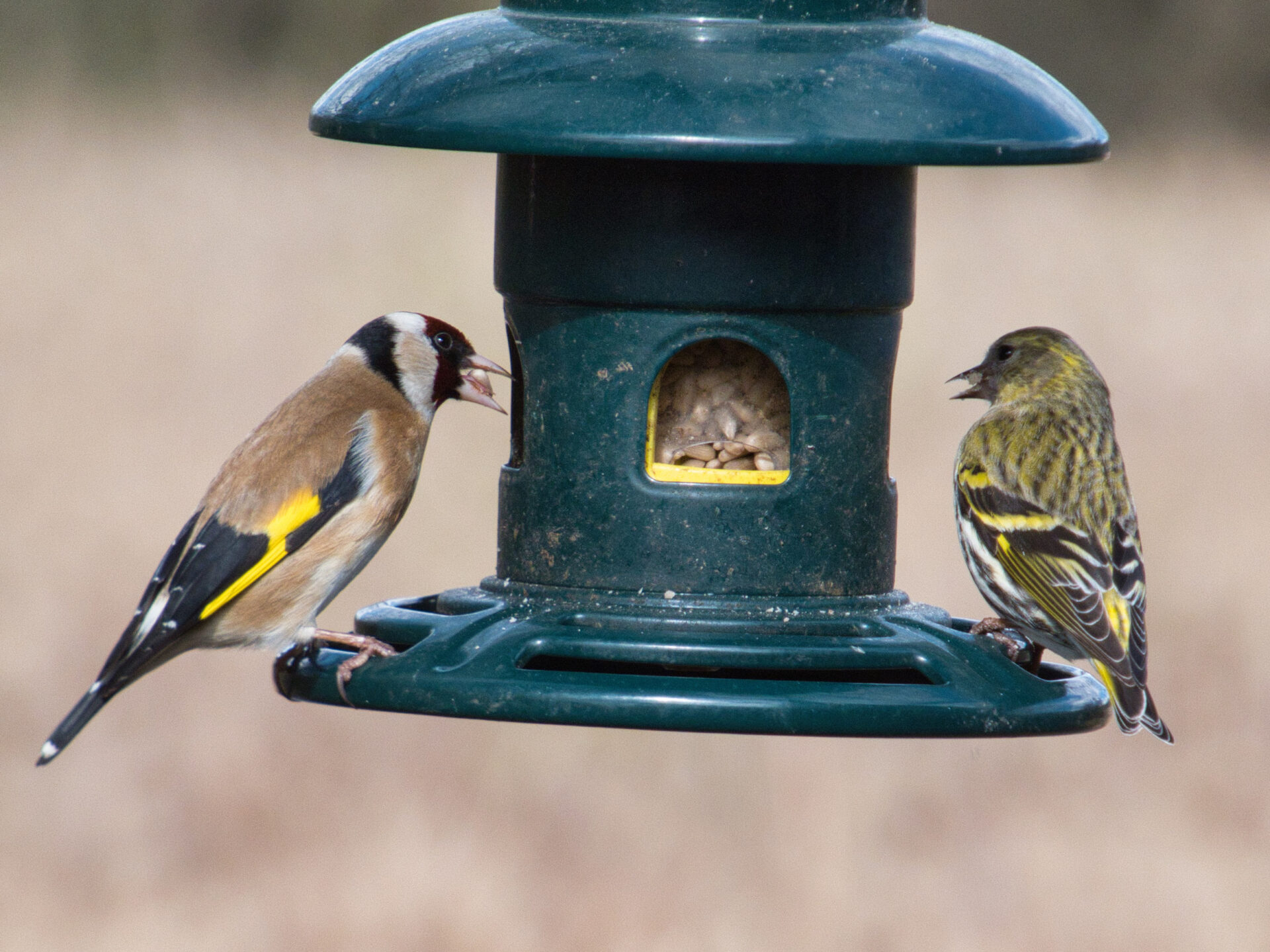
While we were enjoying our lunches at the picnic tables by the visitor centre we were able to watch the Birds on the feeder. Goldfinches, Greenfinches, Chaffinches and then a Siskin arrived. Not everyone noticed but a slightly larger bird dropped in and perched within easy view of the feeder. A male Sparrowhawk was watching hoping for an easy kill, but on this occasion it flew away unsatisfied.
After lunch we drove a short distance to Cavenham Heath, near Tuddenham. We took a small road along the side of the green, past the village pond and as we drove the surroundings became more agricultural until the paved road ended and we continued along a switchback sandy track into the brecklands.
The heath comprises sandy soil with sparse heather and grass cover and a few mainly birch trees. Immediately we saw birds the size of Starlings but with lighter plumage. They were Wheatear, which would have recently arrived on migration, with many en route to moors and higher ground such as in Wales or the Pennines. Then we spotted larger birds on the ground making short runs as they moved from location to location. They had large piercing yellow eyes and bright yellow legs. These were Stone-curlew, summer migrants from southern Europe that had recently arrived. They like areas of low intensity farming with patches of bare ground or close cropped grass.

Although called Stone-curlews they are genetically nothing to do with our common Curlew. The reason for their name is not clear to me but may be something to do with their call, heard mostly at night, which some people think resembles the bubbling song of the common Curlew. Stone-curlews are native to southern European and Asian countries with undeveloped agriculture. They were quite widespread in the UK but intensive agriculture caused many nests to fail due to farmers raking the ground or allowing grass to grow too tall. Nowadays, they are mainly found in Wiltshire and East Anglia, often on MoD land which has not been disturbed by agriculture. Some bird identification books call them dry land waders but that does not seem to describe them very well. They are unusual birds that need protection if the habitats they rely on are to be maintained. They are shy and hard to see once they have selected nest sites in ploughed or other uneven terrain. When they sit for long periods during daytime in summer they are very hard to see. We were lucky on this trip as they were roaming about on the grassy areas where it was possible to see their bright yellow legs, probably as they having recently arrived were getting to know the territory.
Let’s hope these curious gawky looking birds are around for years to come for us to enjoy.
Words by John
Library Pictures from Melvyn
Goldfinch and siskin Stone curlew Nuthatch Treecreeper Pochard Redsgank and lapwing