We usually go out for our trips on the fourth Wednesday of the month. This December that would have been the 25th and as some members were going to be busy that day we decided to bring our walk forward to the 11th and combine it with a Christmas lunch at Willingham Auctions café.
Some members couldn’t make this irregular trip but we still managed to attract seven for our visit despite overcast gloomy weather and doubts as to whether or not the road through Earith would be closed due to flooding. However, the day was dry and the wind was light so conditions were not too bad for the time of year.
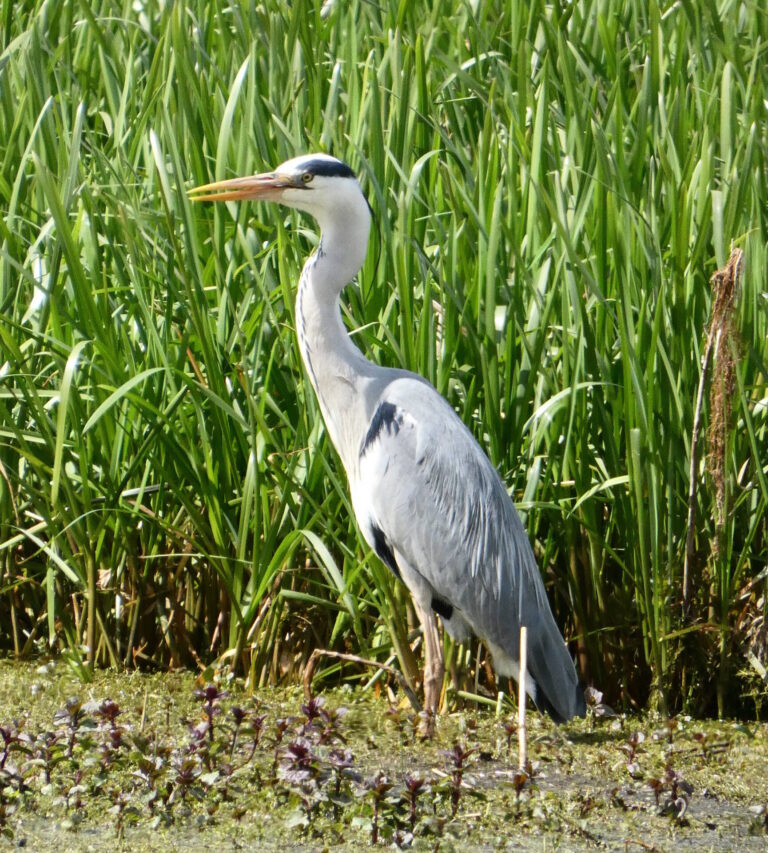
In fact, we started spotting birds from the off, with Kestrel, Black-headed Gulls and a flock of maybe 50 Lapwing circling. Moving on to the first lagoon, Long Lockspits I think, we found numerous Pied Wagtails and a mystery smaller brown bird that I’ll come back to later. There were also, Mallard, Coot, Gadwall and Shoveler ducks a Grey Heron and a Great White Egret. A flock of Starling, looking very handsome in their spotty winter plumage, were moving across the marsh.
A deer entertained us by breaking cover and rushing across in front of us so fast that it lost its footing and did a couple of somersaults. We saw (Chinese) Water deer later in our walk. They are quite common at this site.

A female Marsh Harrier flew slowly over scanning the marsh for easy prey. Mute Swans were here and there in the reed beds.
Carrying on round the perimeter track came across a single Greylag Goose that was very unperturbed by our presence and defiantly refused to move off the path as we approached. It gave us the chance to see its sturdy pink legs at close quarters before flying off.
Nearby a male Stonechat was perched on a bramble bush. They do not migrate but usually stay in pairs, however in this case the female was not seen.
The Western end of the reserve was quiet, or at least whatever birds were there were keeping their heads down.
As we started back towards the car park we spotted more ducks on the lagoon. This time it was Tufty Ducks in a flotilla with about six female Pochard and a Coot. Curiously, there were no male Pochards in attendance.
Further along the bank of the High-level Canal, we heard Cetti Warbler and we got lucky when a pair showed themselves while having a chase in what appeared to be a territorial dispute. Cetti Warblers are often heard in the reed beds but are rarely seen as they spend most of their time low down.

Now, returning to our mystery bird from earlier, we thought it might have been a Water Pipit and research I have done since seems to confirm that. The Pipit family comprises Meadow Pipits, which are by far the commonest, Rock Pipits, which are usually found on the coast on stony beaches, Tree Pipits, which are summer visitors whose numbers have declined considerably in recent years, and Water Pipits which are occasional winter visitors. There are other rare Pipits but we’ll leave those out for now.
Water Pipits breed in central European mountains, such as the Pyrenees, the Alps and the Carpathians. They spend the summer at high altitude but comes down to lower levels in the winter and between 100 and 200 of them arrive in England where they overwinter in flooded meadows, particularly in East Anglia.
This behaviour is called altitudinal migration and is a feature of bird behaviour which is poorly understood. Little is known about the routes used for these journeys or why they do it.
One curious fact is that it is believed that just about all the birds arriving in England for the winter are male. Maybe the females are more sensible and migrate to warmer southern climes.
The birds that do reach us have a reputation for being shy loners making them difficult to watch. They eat insects, snails, dead fish and freshwater algae.
Water Pipits are rare in England and are sometimes overlooked, being a brown streaked bird that was actually classified as a Rock Pipit until 1988. The main identifying features are the white stripe over the eye, dark legs, sometimes red, dark back and light streaking and upright posture.
There seems little doubt that our bird was a Water Pipit.

Stonechat 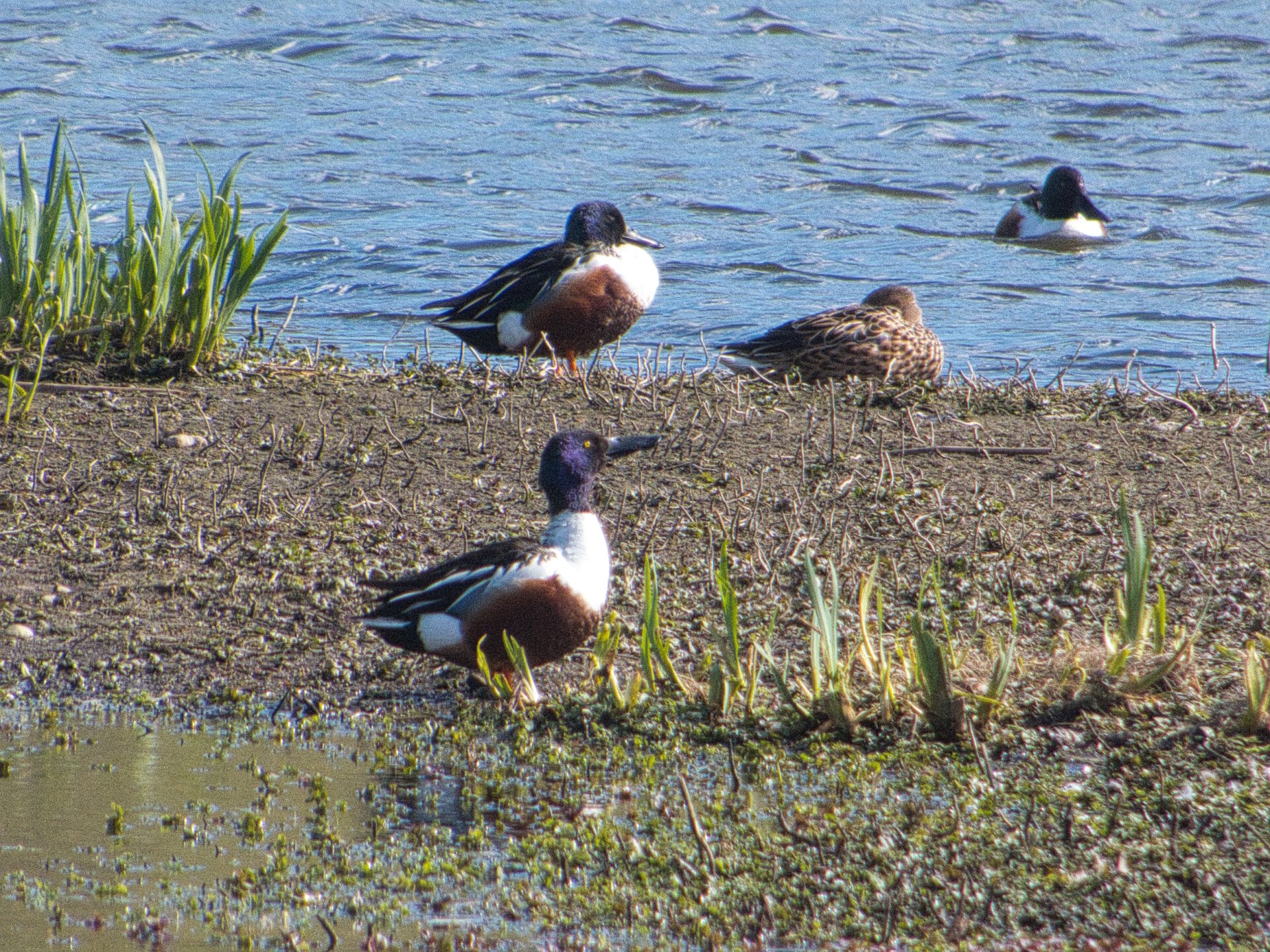
Shoveller 
Gray Heron