May 28, 2025
Seven of us braved some rather wild squally weather for our visit to the Earith end of Ouse Fen. I was a little disappointed as we have had a long period of fine weather most of this spring. Also, there have been regular reports of good birds during April and May, including rarities such as the Great Reed Warbler and Red-footed Falcon. The GRW was assumed to be the same bird that visited for several months last spring while the RfFs were in with the large fall of Hobbies that we sometimes get in mid-spring. This year over 100 were counted on the peak day! That’s not only a lot of Hobbies but also an impressive bit of counting as they fly fast and chase Dragonflies involving frequent changes of direction. In fact, Hobbies are one of the few birds that can outfly a swift and they take young unsuspecting birds usually following a dramatic chase.
Other recent celebrity birds at Ouse Fen include Gadwall and Wood Sandpipers. Gadwall are attractive ducks that arrive here in spring from the south and some breed here. This varies from ducks such as Goldeneye, Pintail and Teal which overwinter here but fly north in spring to breed.
Not to be outdone while talking about celebrity birds, a Bittern flew over and circled coming down near the car park soon after we arrived.
Little and Great White Egrets were on display. The GWE tried to fool us by sporting a black bill but this is normal for breeding birds at this time of year. The rest of the year and other non-breeding birds have the more familiar yellow beaks.
Little Egret bills get yellower in breeding condition and they develop large plumes on the back of their heads. Cattle Egrets also have yellow bills and in breeding condition their chest and the top of their head goes a buff orange shade. The last Wetland Bird Survey at Fen Drayton on 25th May recorded 27 Cattle Egret. Their number seems to be increasing rapidly.

A few Lapwing, also known as Peewits from their call, were in view with the occasional Wood Pigeon and Carrion Crow. Swifts were plentiful and busy with a few Sand Martins spotted. However, the hoped for rarities did not show. Even the GRW was keeping its head down or maybe has moved on. Time will tell.
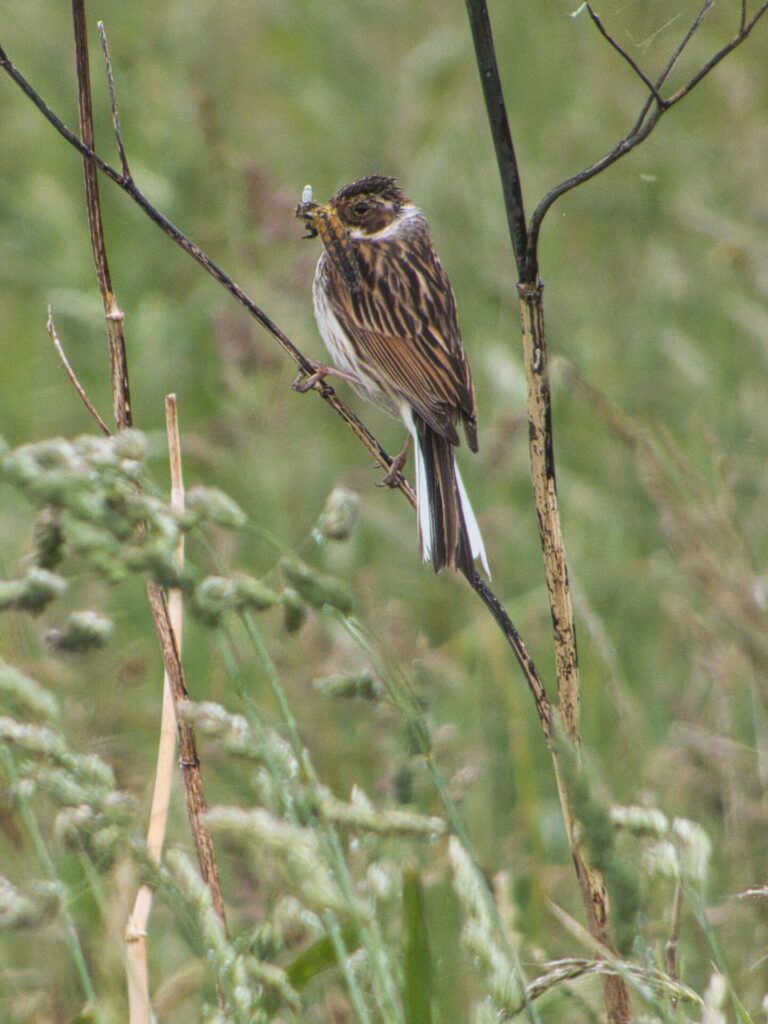
Probably the most numerous bird of the day was the Reed Bunting which seemed to be everywhere. The male with its black head and white collar while the female has a browner head and subtler buff face markings. Both have white edged tails. Younger males have smudgy black heads which get darker as the feathers wear.
I had mentioned that the Reed Bunting call is a rather weak song ending a bit feebly. Just to prove me wrong, the next bird we saw was singing so loudly that we thought it might have been the GRW! I don’t know if birds sing louder to be heard above the wind.
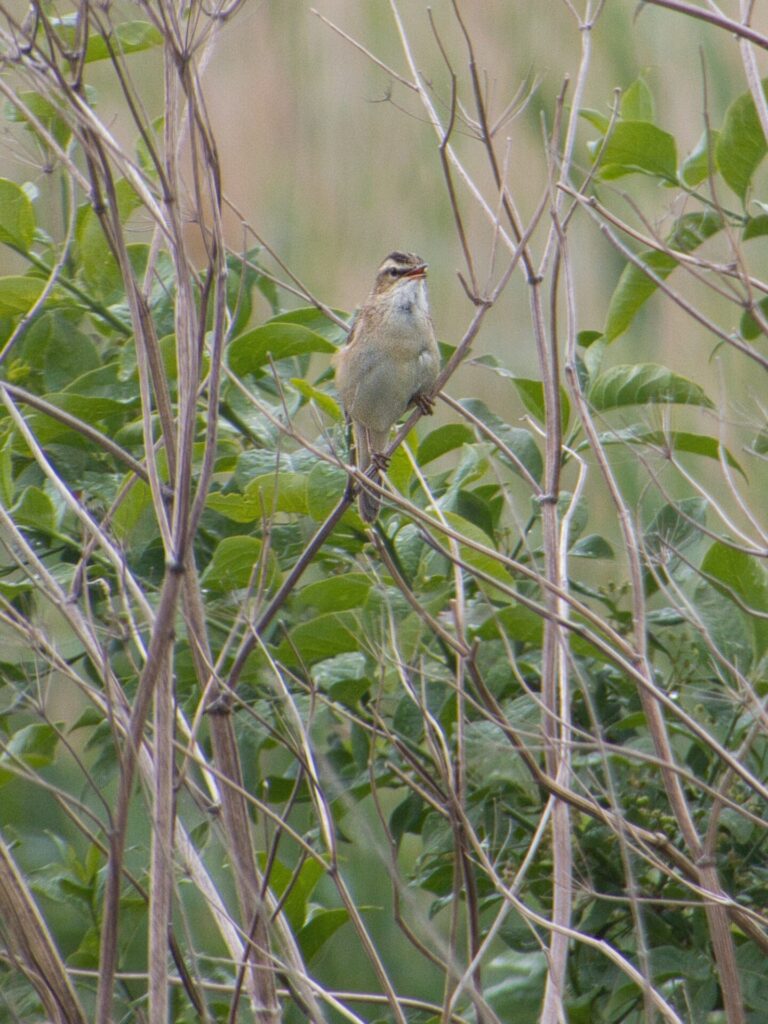
Reed Warblers and Sedge Warblers were in full song giving us a good chance to see if we could tell the difference from their song. Not easy but generally I think the Sedge Warbler gives the more manic performance. Both species seem to be able to sing for very long periods without a break. We heard a few Cetti Warblers but none calling as loudly as they can. Maybe the reverse is true for them when they seem to explode into song when the weather is still.
Ouse Fen is a good place to see Bearded Tits but none obliged us on this trip. They don’t migrate and back in January they were showing here in large groups. The keeper of the RSPB Photo Library said the pictures he’d got of Bearded Tit’s at Ouse Fen this year were some of the best he’d ever seen.
One bird which we heard but didn’t see was a Water Rail. These creeping water fowl squeal like baby pigs. A very strange call. Little Grebe also have a loud penetrating call which we heard in several places.
The final word goes to the pair of Cranes which are often seen on this site. They have bred here for the last several years but although they have produced eggs they have yet to fledge any young. Let’s hope they manage it this year.
By coincidence this was in the current RSPB magazine

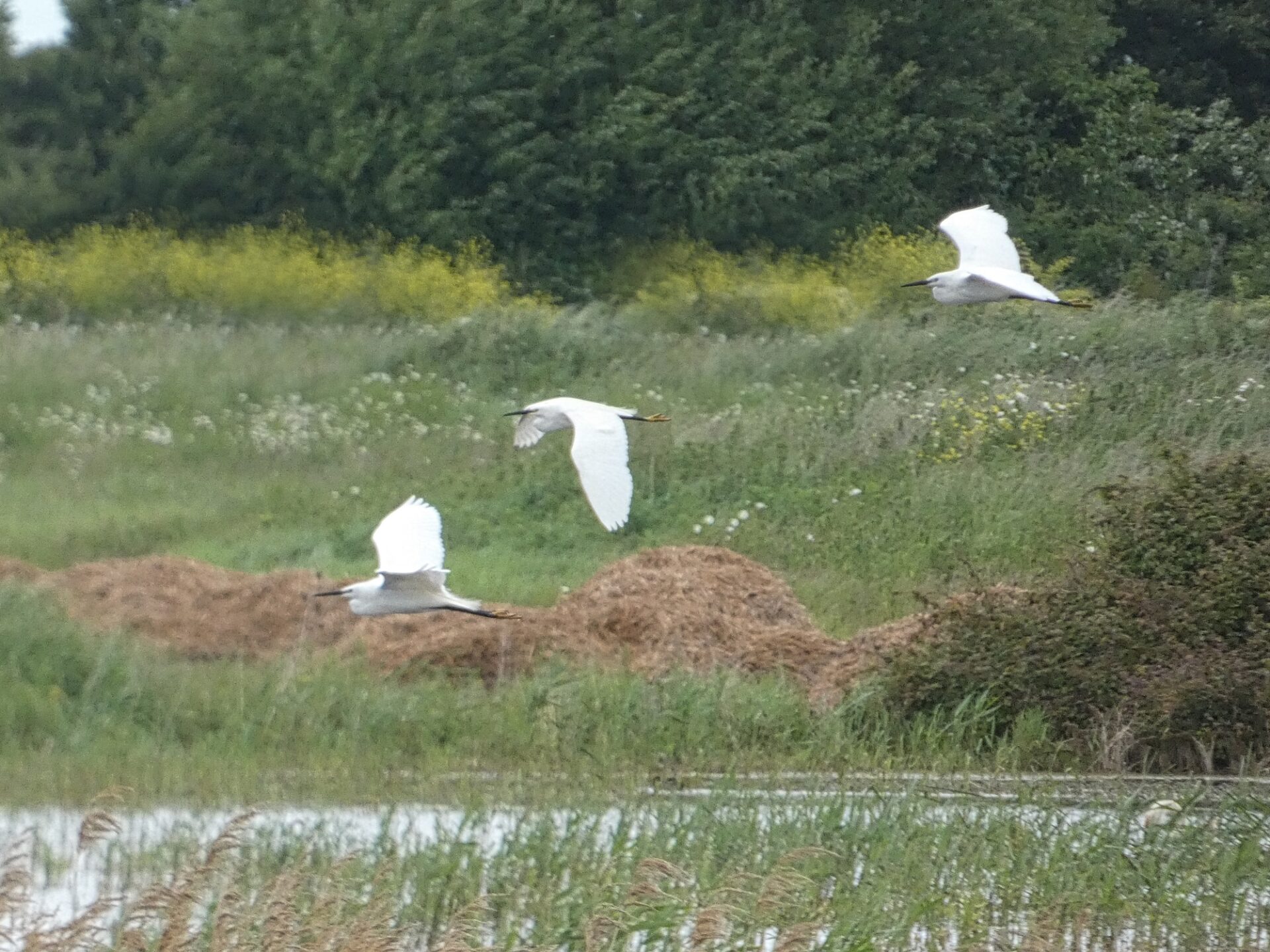
Little Egrets 
Sedge warbler 
Reed bunting Reed bunting